I. Industry Background and Technical Advantages
Lavender (Lavandula angustifolia) essential oil is rich in various aromatic compounds and serves as a vital natural fragrance widely utilized in daily chemical, cosmetic, and pharmaceutical industries.
Traditional extraction processes currently face significant bottlenecks: the extraction yield of steam distillation is relatively low; solvent extraction not only requires the removal of leaching solvents but also leaves residual solvents and chemical substances in the product.
To address these issues, supercritical CO2 extraction technology has emerged as a high-potential alternative. Supercritical CO2 fluid possesses physical characteristics such as high density, low viscosity, and high diffusion coefficients, allowing for the rapid extraction of plant essential oils under near-ambient temperature conditions. This process is easy to operate, offers high yields, and leaves no harmful chemical residues, providing a promising outlook for development and a scientific reference for industrial exploration.
II. Core Equipment and Raw Material Configuration
To ensure extraction efficiency and essential oil purity, this solution recommends the following standardized hardware and raw material configurations:
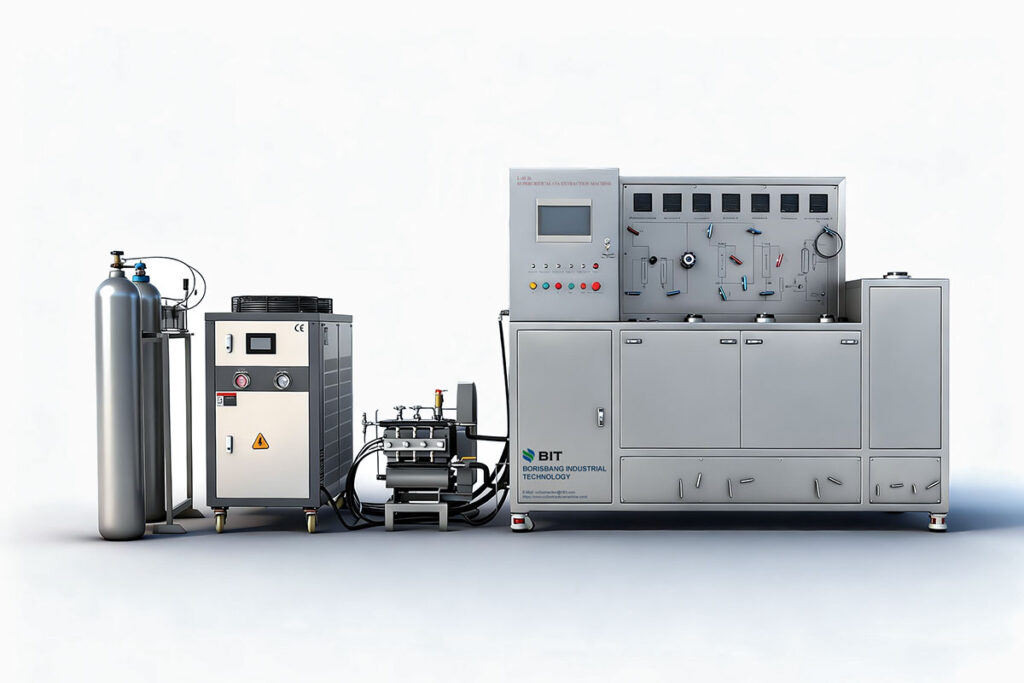
- Core Extraction Equipment: Model L-02 supercritical fluid extraction unit with a 2L extraction vessel capacity, manufactured by BIT Company in Nantong, China. [Learn more about the Small CO2 extraction machine]
- Extraction Medium: Food-grade CO2 with a purity of 99.5%.
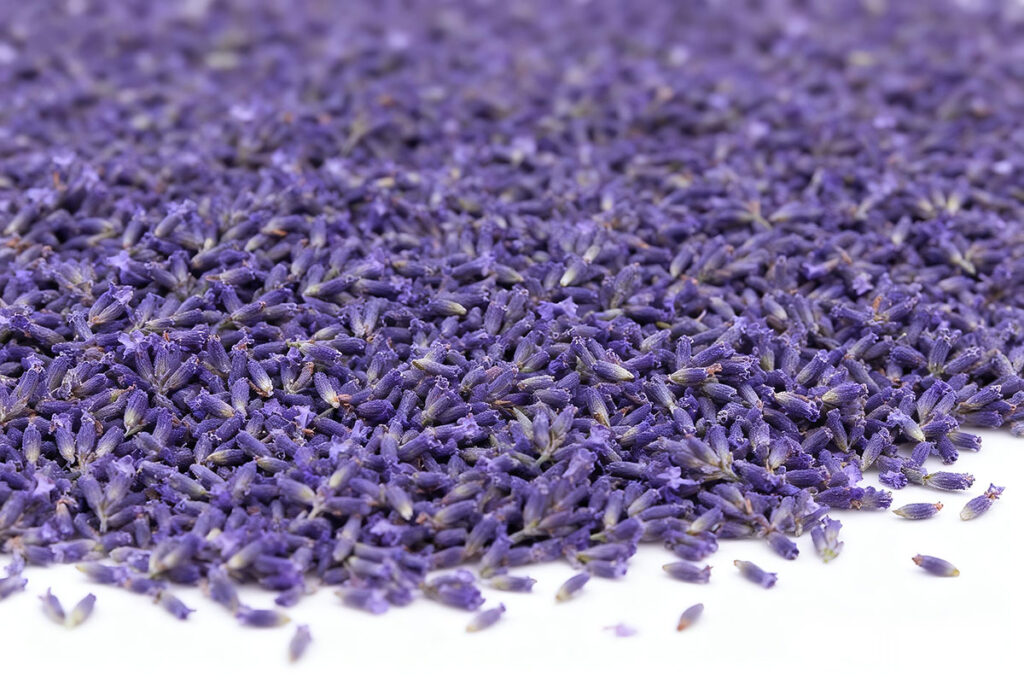
- Processing Raw Material: High-quality lavender flowers.
III. Standardized Extraction Process Flow
(i) Basic Operating Procedures
The standardized single extraction operation flow is as follows:
- Raw Material Pre-treatment: Lavender buds are dried (moisture content controlled at approximately 10%) and lightly crushed (to increase contact area).
- Loading: Load the lavender powder into the extraction vessel.
- Pressurization Stage: After being cooled by the cooling tank, CO2 is delivered into the extraction vessel by a high-pressure plunger pump.
- Extraction Stage: CO2 is pressurized to 22 MPa (extraction pressure) and heated to 45°C by the high-pressure pump to enter a supercritical state, flowing through the extraction vessel. Subsequently, the pressure is reduced to 6.5 MPa (separation pressure) in the separation vessel to precipitate the essential oil.
- Separation Stage: Maintain the specified extraction time under the set extraction pressure and temperature conditions, then release the extract from the extraction vessel into the separation vessel. Through decompression or temperature increase, CO2 returns to a gaseous state, and the essential oil precipitates.
- Recirculation: CO2 is condensed and returned to the storage tank for recycled use.
(ii) Optimized Process Parameter Model
Through orthogonal experimental design and data processing analysis, the degree of influence of each process parameter on the final yield is prioritized as follows: Extraction Time > Extraction Pressure > CO2 Temperature > Flow Rate.
To maximize capacity and quality, the optimized process conditions are: Extraction Pressure 22 MPa, Temperature 45°C, CO2 Flow Rate 20 L/h, and Extraction Time 120 min.
| No. | Extraction Pressure (MPa) | Extraction Temperature (°C) | CO2 Flow (L/h) | Time (min) | Lavender Oil Yield (%) |
|---|---|---|---|---|---|
| 1 | 1 | 1 | 1 | 1 | 3.26 |
| 2 | 1 | 2 | 2 | 2 | 3.79 |
| 3 | 1 | 3 | 3 | 3 | 3.98 |
| 4 | 2 | 1 | 2 | 3 | 4.31 |
| 5 | 2 | 2 | 3 | 1 | 3.27 |
| 6 | 2 | 3 | 1 | 2 | 4.50 |
| 7 | 3 | 1 | 2 | 2 | 3.34 |
| 8 | 3 | 2 | 3 | 3 | 4.14 |
| 9 | 3 | 3 | 1 | 1 | 3.30 |
| K1 | 12.27 | 12.29 | 14.84 | 11.07 | |
| K2 | 15.36 | 12.85 | 15.98 | 14.89 | |
| K3 | 12.43 | 14.95 | 12.09 | 14.13 | |
| k1 | 4.09 | 4.10 | 4.65 | 3.69 | |
| k2 | 5.13 | 4.28 | 4.40 | 4.96 | |
| k3 | 4.14 | 4.98 | 4.33 | 4.71 | |
| R | 1.04 | 0.88 | 0.32 | 1.27 |
IV. Product Quality and Output Benefits
(i) Extraction Yield and Sensory Indicators
High Yield: Under this optimized process, the yield of lavender oil extract ranges between 3.26% and 4.50%, with a maximum of 4.5%, which is higher than the yield from steam distillation.
Sensory Quality: The extract appears as a deep yellow liquid with a small amount of dark green paste. The aroma of the blended oil is soft and closely resembles the fragrance of natural real flowers.
(ii) Core Chemical Composition
Qualitative analysis identified 31 chemical components in the extract, with over 20 components yet to be identified. The major aromatic compounds and their relative contents are as follows:
- Linalyl acetate: 25.40%
- Linalool: 14.53%
- Lavandulyl acetate: 7.93%
- cis-Linalool oxide: 2.75%
- Lavandulol: 2.00%
- Hexyl butyrate: 1.44%
- Borneol: 1.05%
The unique aroma emitted by lavender essential oil and its products possesses various functions, such as insect repellent, odor removal, antibacterial, sedative/hypnotic, and mental stress relief, offering extremely high industrial application value.
V. Economic Cost Accounting (ROI)
Calculated based on single experimental data from the 2L L-02 equipment and average market prices:
- Direct Production Cost (per batch/120 min):
- Raw Material Cost: Lavender dry flower crushed material (calculated based on a loading capacity of 0.8 kg to 1 kg).
- Energy Cost: Electricity (high-pressure pump + temperature control system) approximately 2.5 to 4.0 kWh.
- Medium Loss: Food-grade CO2 circulation loss is approximately 5% to 10% of the total circulation volume.
- Output Value:
- Finished Essential Oil: Based on an average yield of 4.0%, single-batch essential oil output is approximately 32 g to 40 g.
- Market Comparison: Supercritical extraction essential oil is solvent-free with a complete aroma profile; its market unit price is typically 30% to 50% higher than that of distilled essential oil.
- Investment Return Conclusion:
- Industrialization Potential: If scaled up to a 2 × 50L industrial production line, daily processing capacity can exceed 100 kg of raw materials, with an estimated static investment recovery period of approximately 1.5 to 2 years (including equipment depreciation).
| Project | Data | Remarks |
|---|---|---|
| Single Vessel Loading | 0.8 kg | 2L Extraction Vessel |
| Single Batch Oil Yield | 36 g | Calculated at 4.5% yield |
| Daily Production Capacity | 144 g | Based on 4 batches per day |
| Product Purity | ≈100% | Solvent-free, direct cosmetic grade |
FAQ
Is supercritical CO2 extraction expensive?
Initial investment is higher, but high yield, purity, and minimal post-processing make it cost-effective long-term. We offer flexible payment plans and small-scale systems.
How is CO2-extracted lavender oil different from steam-distilled?
It contains a broader spectrum of aromatic compounds, including non-volatile components like squalene and phytosterols. The scent is richer and more natural, perfect for luxury applications.
Is the system difficult to operate?
Not at all. Our systems include Siemens PLC automation, touchscreen control, remote monitoring, and full training. Typically, only 1–2 operators are needed.
What’s included in a full CO2 extraction setup?
It includes an extraction vessel, storage tanks, filtration units, a CO2 booster pump, pressure regulators, a chiller, recovery units, and a central control console. Custom configurations are available.
How We Support Your Lavender Oil Business
BIT is a high-tech enterprise specializing in R&D, manufacturing, and total solutions for supercritical CO2 extraction systems. Our equipment is trusted across Europe, Southeast Asia, and North America.
We provide:
- Customized CO2 extraction system (10L~500L+)
- Free sample testing and formula suggestions
- Automated control and remote operation and maintenance support
- One-stop delivery and full-cycle after-sales
Please contact us for free technical solutions
Whether you are a startup brand preparing to enter the essential oil field or a mature enterprise pursuing high-end quality upgrades, we are willing to be your partner from source to market. [Contact Us]